
For fragrance brands, the cap is more than a functional closure—it’s the first physical touchpoint a customer has with your product. A mismatched cap can make a premium fragrance feel cheap, cause leakages in transit, or create quality complaints that erode brand trust. Yet many product teams treat cap selection as an afterthought.
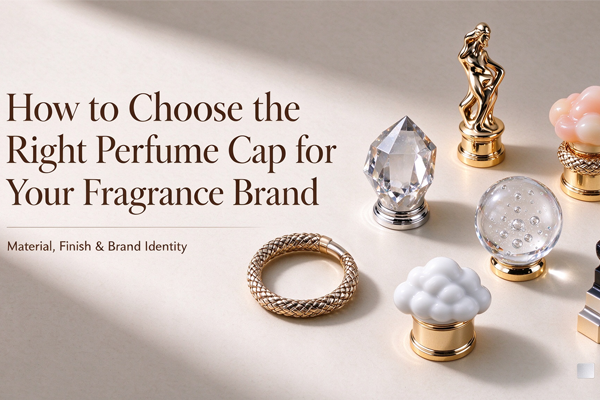
As a perfume cap manufacturer with 16+ years of experience serving over 200 global fragrance brands, JSM has helped brands of every tier select closures that align with their positioning, budget, and functional needs. In this guide, we share our proven 6-factor selection framework, tier-by-tier recommendations, and the most common sourcing mistakes to avoid.
6 Key Factors to Choose the Perfect Perfume Cap
Every good cap decision starts with evaluating these six core criteria, in order of priority:
1. Material: Align With Your Brand Tier
Material is the single biggest driver of perceived quality and cost. Your choice should directly match your retail price point and brand positioning.
- Plastic caps: Best for entry-level and mass-market fragrances. Lightweight, low-cost, and fast to produce, but limited in perceived luxury.
- Aluminum perfume caps: A step up from plastic, with a clean metal look at a moderate price point. Ideal for mass-premium and body mist lines.
- Zamac (zinc alloy) caps: The standard for premium fragrance. Solid weight, durable, and compatible with all high-end finishes. This is the base material for nearly all luxury closures.
- Enamel perfume caps: The highest tier of decorative metal caps. Hand-filled color inlays deliver unmatched vibrancy and brand differentiation for prestige lines.
→ For a full deep dive into material tradeoffs, read our head-to-head zamac vs plastic perfume caps comparison and complete enamel perfume caps guide.
2. Neck Size & Functional Compatibility
A beautiful cap is useless if it doesn’t fit your bottle. Perfume pump necks follow industry standard sizes, but tolerances vary between bottle manufacturers.
The three most common standard neck sizes are:
- 15mm: used for miniatures, travel sizes, and tester bottles
- 18mm: the global standard for 30ml–100ml retail fragrance bottles
- 20mm: used for larger 100ml–200ml bottles and some pump systems
At JSM, we design all caps to hold ±0.1mm dimensional tolerance, and we always recommend testing fit samples with your actual bottle and pump before mass production. Mismatched tolerances are the #1 cause of loose caps, leakages, and product returns.
3. Weight & Tactile Experience
Consumers intuitively associate weight with quality—and this is especially true for fragrance packaging. The heft of a cap shapes the entire unboxing ritual.
- Plastic caps: 2–4 grams → feels lightweight, disposable
- Aluminum caps: 4–6 grams → feels solid but light
- Standard zamac caps: 8–12 grams → feels substantial, premium
- Enamel zamac caps: 10–18 grams → feels heavy, luxurious, jewelry-like
For products sold in physical retail where customers handle the bottle before buying, weight is a silent purchase driver.
4. Aesthetic Style & Finish
The cap’s finish should reinforce your brand identity, not compete with it. Today’s premium fragrance market offers a full spectrum of surface treatments:
- Electroplating finishes: bright gold, matte gold, gunmetal, chrome, rose gold, antique bronze — each creating a different brand personality
- Enamel inlays: for vivid, permanent color and intricate logo work
- Magnetic closure: for a smooth, self-aligning opening experience that signals ultra-luxury
→ Explore every option in our full guide to perfume cap electroplating finishes and deep dive on magnetic perfume cap technology.
5. Budget & Minimum Order Quantity
Cap cost typically represents 3–8% of total product cost for premium fragrances, but it can make or break margins for mass-market lines.
- Plastic caps: lowest unit cost, MOQs starting at 10,000+ pieces
- Aluminum caps: low-moderate cost, MOQs starting at 5,000 pieces
- Zamac caps: moderate-high cost, standard MOQ 3,000–5,000 pieces
- Enamel caps: highest cost, standard MOQ 5,000 pieces per design
For small-batch launches and limited editions, look for manufacturers that offer flexible MOQ options rather than forcing you into larger volumes than you need.
→ For a full breakdown of pricing, tooling fees, and order structures, see our custom perfume caps OEM step-by-step guide.
6. Lead Time & Go-To-Market Schedule
Different materials and processes have very different production timelines:
- Plastic caps: 15–25 days
- Aluminum caps: 18–28 days
- Standard zamac caps: 25–35 days
- Enamel / magnetic caps: 30–40 days (multiple firing / assembly steps)
Always build buffer time for sampling, approval, and transit. Rushing production almost always leads to quality issues.
Perfume Cap Recommendations by Price Point
Based on our experience with brands across every tier, here’s what we recommend for each retail price segment:
Entry-Level / Mass Market (under $30 retail)
Recommended: Plastic caps or basic aluminum caps Finishes: Metallized UV coating, simple spray colors Use case: Drugstore fragrances, body mists, promotional SKUs, gift-with-purchase Priority: Cost efficiency, speed, and volume scalability
Mid-Premium ($30–$70 retail)
Recommended: Standard zamac caps with quality electroplating Finishes: Matte gold, bright chrome, gunmetal Use case: Mainstream premium brands, department store lines, emerging indie houses Priority: Balanced quality and cost, consistent retail presentation
Premium ($70–$150 retail)
Recommended: Enamel inlay caps or magnetic zamac caps Finishes: Matte gold, rose gold, antique bronze Use case: Niche artisan fragrances, luxury beauty brands, limited editions Priority: Brand differentiation, tactile experience, shelf presence
Ultra-Luxury ($150+ retail)
Recommended: Custom-shaped enamel caps with magnetic closure Finishes: Custom electroplating tones, multi-color enamel, hand-polished details Use case: Prestige heritage houses, collector’s editions, collaborative releases Priority: Craftsmanship, uniqueness, uncompromising quality
7 Common Mistakes to Avoid When Sourcing Perfume Caps
After 16 years in the industry, we’ve seen brands make the same costly mistakes over and over. Avoid these:
- Choosing by price alone The cheapest quote almost always comes with hidden tradeoffs: thinner plating, lower-grade zamac, skipped inspection steps, or inconsistent color. What you save per unit you’ll pay back tenfold in returns and brand damage.
- Skipping fit sampling with your actual bottle “Standard size” means different things to different bottle makers. Always test cap samples on your actual production bottles, not just sample bottles.
- Ignoring compliance requirements If selling into the EU or US, your caps must meet REACH, RoHS, and Prop 65 standards. Reputable manufacturers will provide test documentation upon request. At JSM, all our products are produced under ISO9001:2015 and SMETA certified systems with full compliance documentation.
- Overdesigning for manufacturing That intricate logo you love on screen might not reproduce cleanly at 10mm scale. Always involve your manufacturer early in the design process to avoid costly reworks.
- Underestimating finish variation Photos and digital mockups only tell part of the story. Always approve a physical finished sample before mass production—color and sheen will look different in real light.
- Not planning for reorders If your product sells well, will your supplier be able to produce matching reorders 6 or 12 months later? Lock in color standards and tooling storage with your manufacturer.
- Disregarding long-term durability A cap that looks perfect out of the box but scratches or fades after three months on shelf hurts your brand. Prioritize wear resistance for permanent SKUs.
Quick Decision Checklist
Use this 10-point checklist to evaluate any cap option:
☐ Matches your brand price tier and positioning
☐ Fits your bottle neck size with proper tolerance
☐ Weight feels appropriate for your product
☐ Finish aligns with your brand identity
☐ Fits within your per-unit budget
☐ MOQ matches your order volume
☐ Production lead time works with your launch schedule
☐ Supplier provides compliance documentation
☐ You’ve tested a physical fit sample
☐ Supplier can guarantee consistent reorder quality
Frequently Asked Questions
Q: How do I measure my perfume bottle neck size? A: Measure the outer diameter of the bottle neck where the cap seats. For best results, measure with calipers. If you’re unsure, send us a sample bottle and we’ll verify fit and recommend the right cap size.
Q: Can I get custom samples before committing to mass production? A: Yes. We always recommend prototype sampling before full production. Standard sampling time is 7–15 days for existing shapes, 15–25 days for fully custom designs requiring new tooling.
Q: What if my bottle uses a non-standard neck size? A: We can develop custom inner fitments to match non-standard neck dimensions. This adds a small development cost but ensures perfect fit and function.
Q: Can I mix different finishes in one order? A: For the same cap shape, yes. We can produce multiple finish options in one production run, with minimum quantities per finish. This is popular for brands launching multiple variants in one collection.
Q: What’s the smallest order quantity for custom perfume caps? A: For standard shapes with custom finish and logo, we can support small-batch runs starting at 1,000 pieces for pilot launches. For fully custom shapes, MOQ varies based on tooling complexity.
Your Cap Selection Partner: JSM Hardware
Choosing the right cap is easier when you work with a manufacturer that understands both production and branding. At JSM, we don’t just sell caps—we help you select the right closure for your specific product, market, and budget.
Our complimentary selection support includes:
- Neck size verification and fit testing
- Material and finish recommendations based on your price point
- Design for manufacturability feedback
- Prototype sampling before production commitment
- Transparent pricing and lead times
Not sure which cap is right for your next launch? Contact our product engineering team today for a free, no-obligation selection review and quotation.