
For emerging fragrance brands and niche perfumers, minimum order quantity (MOQ) can be one of the biggest barriers to custom packaging. Many assume custom metal caps require orders of 10,000 pieces or more. Others accept an unusually low MOQ, only to find that quality varies from piece to piece.
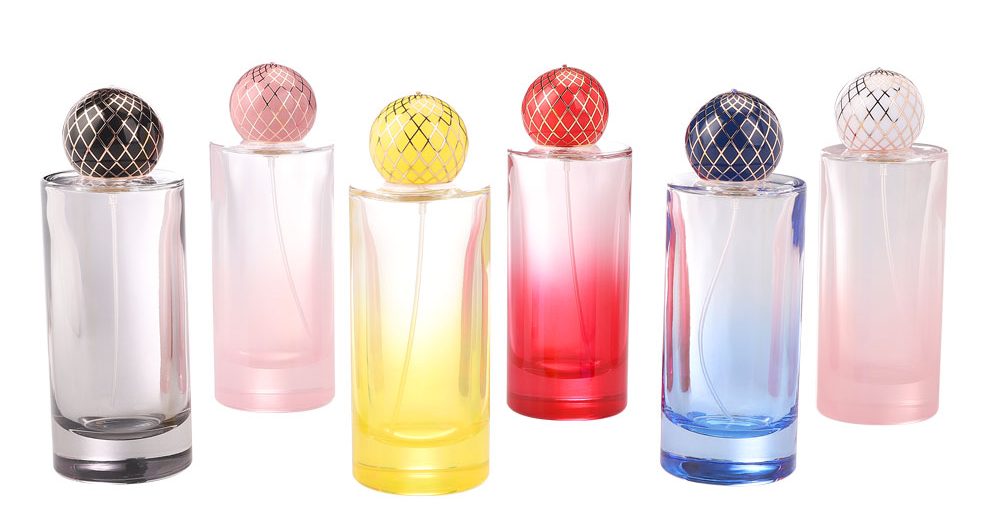
As a custom perfume caps OEM manufacturer with 16 years of experience serving brands at every stage, JSM takes a practical approach to MOQ. This guide explains why MOQs exist, how they vary by cap type and production process, five ways to reduce your order size, and what realistic MOQs look like in 2026.
Why Do Perfume Cap Manufacturers Have MOQs?
MOQ isn’t an arbitrary barrier. It reflects the economics of production. Every custom metal cap order involves fixed setup costs that don’t shrink with the order size, including:
- Tooling and setup: Preparing and adjusting die-casting molds, assembly jigs, and plating fixtures for your design.
- Color formulation: Mixing and testing custom enamel or electroplating colors to match your brand standards.
- Production-line changeover: Stopping an existing run, cleaning equipment, and reconfiguring the line for your product.
- Quality calibration: Preparing inspection gauges, golden samples, and test procedures for your specifications and finish.
- Material minimums: Raw material suppliers also set minimum batch sizes for alloys, plating chemicals, and enamel powders.
With a smaller order, these fixed costs are spread across fewer units, increasing the per-unit price. A reputable factory will explain that trade-off clearly rather than hide costs or compromise quality to offer an artificially low MOQ.
MOQ Breakdown by Cap Type and Process
MOQs can vary significantly depending on the material, production complexity, and whether you choose an existing shape or a fully custom design. Here are JSM’s standard MOQ benchmarks for 2026:
| Cap type | Standard MOQ | Notes |
|---|---|---|
| Standard zamac cap with custom plating or logo | 2,000 pcs | Uses an existing cap base; the lowest-cost custom option |
| Enamel perfume caps (single color) | 2,000 pcs | Requires custom enamel formulation and manual dotting setup |
| Multi-color enamel caps | 2,000 pcs | Additional colors require more setup and multiple firing cycles |
| Magnetic perfume caps | 2,000 pcs | Requires magnet calibration and assembly-line setup |
| Fully custom shape (new tooling) | 2,000 pcs | Complex, sculptural designs may require higher quantities |
| Aluminum perfume caps | 2,000 pcs | Simpler production allows for lower minimums |
These are baseline figures. For brands that can commit to annual volumes, we can often negotiate lower MOQs for repeat orders.
For more on how production complexity affects cost and lead time, see our guide to the enamel perfume cap manufacturing process.
5 Practical Ways to Lower Your MOQ Without Sacrificing Quality
You don’t need to order 10,000 pieces to get custom, premium perfume caps. These are five approaches we often recommend to new and small-batch brands:
1. Start with a Standard Cap Base
The simplest way to lower your MOQ is to use an existing cap shape instead of commissioning a new mold. You can still customize the plating, add a logo, or include enamel inlays—without taking on the tooling costs and minimums associated with a fully custom shape.
It’s a popular choice for first-time brands: you get a premium, customized cap at roughly half the MOQ of a fully custom design.
2. Combine Multiple SKUs in One Production Run
Launching two or three fragrance variants? Use the same cap base for each and vary the finish or enamel color. Running them together can minimize changeovers and reduce the effective MOQ per SKU by 30–50%.
For example, you might use the same cap shape for one SKU in matte gold, one in gunmetal, and one with black enamel. The combined MOQ would be 5,000 pieces total, rather than 5,000 per SKU.
3. Run a Pilot or Trial Batch
For first-time launches, we offer pilot-batch pricing starting at 1,000 pieces for standard shapes. The per-unit cost is higher than it is for a full production run, but a pilot lets you test market demand before committing to a larger order.
Pilot batches follow the same quality standards as full runs, with no shortcuts on plating, inspection, or finish.
4. Simplify Your Design
The more production steps a design requires, the higher its MOQ is likely to be. You can reduce complexity by:
- Choosing one enamel color instead of several
- Using standard plating rather than custom color matching
- Opting for laser engraving instead of enamel-filled logos
- Sticking to standard neck sizes (15 mm, 18 mm, or 20 mm)
Even a small change can often reduce your effective MOQ by 2,000 pieces or more.
5. Commit to Annual Volume
If you can commit to a total annual volume across multiple orders, we may be able to reduce or waive tooling fees and lower the MOQ for each individual batch. This approach works well for established brands with predictable sales.
At JSM, we also offer tooling-fee rebates: meet your agreed annual volume target, and we’ll refund 100% of your original mold cost.
JSM’s Flexible MOQ Philosophy
Your MOQ should fit your business—not the other way around. We work with brands at every stage of growth:
- Startup stage: 1,000-2000-piece pilot batches for standard shapes
- Growth stage: 3,000–5,000-piece standard production runs
- Established brands: Custom volume agreements with reduced pricing and priority scheduling
We don’t push brands to order more than they need, and we don’t compromise quality to meet an artificially low MOQ. Whether an order is for 1,000 or 100,000 pieces, it is produced under our ISO 9001:2015 and SMETA-certified quality system and receives 100% final inspection.
Frequently Asked Questions
Q: Why do MOQs vary so much between manufacturers?
A: Because suppliers don’t always define or apply “MOQ” in the same way. A factory quoting a 1,000-piece MOQ may be skipping inspection steps, using lower-grade materials, or building costs into the unit price. Compare MOQs alongside quality standards—not price alone.
Q: Is quality lower for smaller batches?
A: Not at JSM. All orders follow the same production process, inspection standards, and plating procedures. The difference is the per-unit cost: fixed setup costs are spread across fewer pieces in a smaller order.
Q: Do repeat orders have the same MOQ?
A: Often, they don’t. Once the tooling is ready and color standards are established, setup costs are lower. We can often produce repeat runs at 60–70% of the original MOQ.
Q: How does the tooling fee relate to MOQ?
A: A tooling fee is a one-time cost for creating a custom shape. MOQ is the minimum quantity for a production run. For high-volume orders, we may waive the tooling fee.
Q: Can we start small and scale up later?
A: Absolutely. It’s the approach we recommend for many new brands. Start with a 1,000–3,000-piece pilot run, then scale up once you’ve validated demand. We store your tooling and golden samples for at least 24 months to make reorders easier.
Conclusion
MOQ doesn’t have to stand between your brand and premium custom packaging. The key is to work with a manufacturer that explains its minimums, offers options for different stages of growth, and doesn’t cut corners to promise a lower number.
At JSM, we aim to grow alongside our clients. Many of the brands we now produce more than 50,000 pieces a year for began with a single 2,000-piece pilot order. We’d rather become your long-term partner than push you into an order you’re not ready for.
If you’ve been told your order is too small for custom perfume caps, contact our OEM team. Share your project details and volume requirements, and we’ll recommend an MOQ structure suited to your business stage—without compromising on quality.