
As EU plastic packaging taxes take effect and beauty brands work toward circular-economy goals, sustainable packaging has become more than a marketing buzzword—it’s an increasingly important procurement requirement. For fragrance brands, one question comes up again and again: are metal perfume caps actually a more eco-friendly choice than plastic?
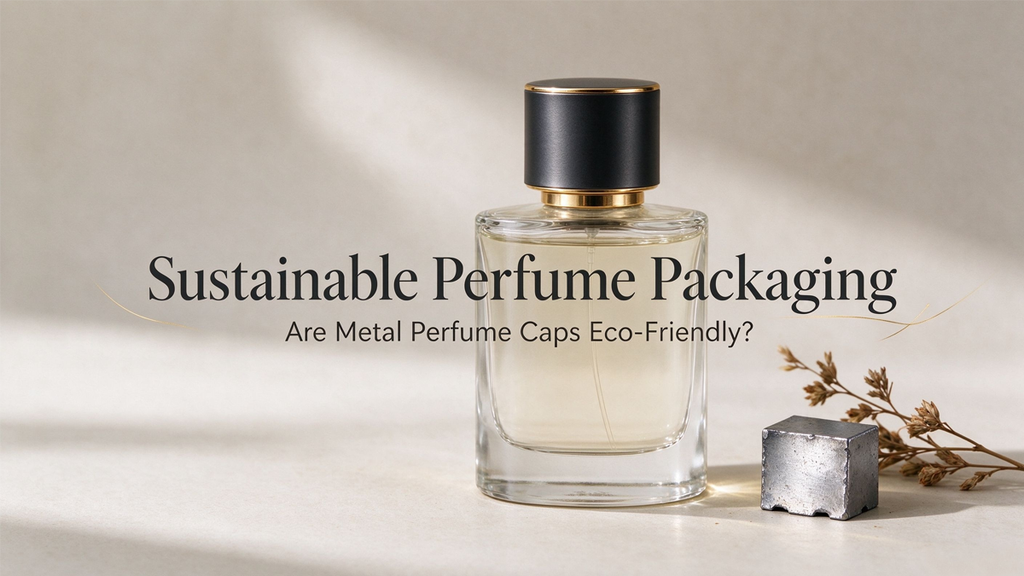
As a zamac perfume cap manufacturer with 16 years of production experience and EU REACH and RoHS compliance, JSM works with brands developing sustainability-focused packaging strategies. This guide examines the environmental profile of metal perfume caps: where they offer clear advantages, what tradeoffs to consider, how they compare with plastic, and what to look for when sourcing more sustainable closures.
How We Evaluate Eco-Friendly Perfume Packaging
There’s no single “green” label that can capture a package’s full environmental impact. At JSM, we look at five key dimensions:
- End-of-life recyclability: Can the material be recovered and reused after the product is finished?
- Embodied carbon: How much energy is used to produce the raw materials and manufacture the packaging?
- Pollution risk: Could the material shed microplastics or release harmful substances?
- Regulatory compliance: Does it meet relevant environmental and chemical safety standards?
- Product lifespan: How long does the packaging retain its function and appearance?
This framework offers a more useful basis for comparing metal closures with plastic alternatives than marketing claims alone.
5 Environmental Advantages of Metal (Zamac) Perfume Caps
Zinc alloy, commonly known as zamac, is widely used for premium metal perfume caps. Its durability and potential for material recovery give it several environmental advantages over plastic.
1. Highly Recyclable
Zinc alloy can be melted down and recast into new products, and the material can be recycled repeatedly without a meaningful loss of its properties. Actual recovery depends on local collection and sorting systems, but established metal recycling infrastructure makes recovery possible in many markets.
At JSM, 95% of in-plant production scrap—including sprue gates, offcuts, and rejected parts—is collected and sent for remelting. This helps us reuse production material rather than send it to waste.
2. No Microplastic Shedding
Plastic packaging can break down into smaller fragments over time, contributing to microplastic pollution. Metal caps do not break down into plastic particles or release plastic additives into the environment.
This makes metal an appealing option for brands looking to reduce their reliance on plastic packaging, particularly as regulations and consumer expectations continue to evolve.
3. A Longer Product Lifespan
A well-made zamac cap can retain its appearance and function for five years or more under normal conditions—well beyond the typical shelf life of a fragrance. Plastic caps are generally more vulnerable to scratching, fading, and clip breakage.
Durable packaging can help reduce waste in two ways:
- Fewer defective units are discarded during storage and retail.
- The cap is more likely to remain intact and suitable for recycling after use.
For permanent SKUs that stay in production for years, this durability can help reduce packaging waste per unit sold.
4. Compliance With Chemical Safety Standards
Responsible manufacturers should be able to demonstrate compliance with the requirements relevant to the markets they serve. These may include:
- EU REACH requirements for restricted substances
- RoHS limits for certain hazardous substances
- California Proposition 65 requirements for the US market
At JSM, our electroplating lines use cyanide-free plating chemistries, and our enamel glazes are formulated without toxic heavy metals. We provide test documentation for shipments to support customs clearance and brand ESG reporting.
Production is managed under our ISO 9001:2015 and SMETA-certified quality and environmental systems, with regular third-party audits.
5. Enamel Finishes Are Built to Last
Even decorative enamel perfume caps can be a durable choice. Unlike some printed or painted finishes that can wear with use, cured enamel is bonded to the metal base. That helps the cap retain its appearance over time, while the metal core remains recoverable through recycling processes.
The Real Tradeoffs: What to Consider
Metal caps aren’t a perfect environmental solution. Responsible manufacturers should be clear about their limitations as well as their advantages.
1. Higher Production Energy
Die-casting and electroplating generally require more energy per unit than plastic injection molding. As a result, a metal cap may have a higher production-stage carbon footprint.
That is only one part of the picture, though. A full lifecycle assessment should also consider factors such as:
- How much material is recovered after use
- How long the packaging remains functional
- Whether the cap is replaced or discarded before the fragrance is used
The overall impact depends on the specific product, production methods, and end-of-life system. Brands comparing materials should look at the full lifecycle rather than production energy alone.
2. Raw Material Mining
Mining and refining primary zinc have environmental impacts. This challenge applies across the metals industry, not just to perfume caps.
To help reduce reliance on virgin material, JSM is gradually increasing the share of post-consumer recycled (PCR) zinc in our production feedstock. We also prioritize suppliers with responsible sourcing practices.
3. Not Biodegradable—and That’s Not the Only Measure
Metal does not biodegrade. But biodegradability alone isn’t a reliable measure of sustainability. In a well-functioning circular system, a material that can be collected and recycled may offer more value than one described as biodegradable but sent to landfill.
Side-by-Side Sustainability Comparison
| Metric | Zamac metal caps | Plastic caps | Aluminum caps |
|---|---|---|---|
| Recyclability | Recyclable; recovery depends on local collection and sorting | Varies by plastic type and local recycling access | Recyclable; recovery depends on local collection and sorting |
| Microplastic risk | None from the metal itself | Possible as plastic breaks down | None from the metal itself |
| Production energy | Moderate to high | Generally lower | Moderate |
| Product lifespan | 5+ years | Often 1–3 years | Often 2–4 years |
| Chemical safety | Depends on materials and compliant finishing | Varies; depends on additives and formulation | Depends on materials and finishing |
| Circular economy potential | High where collection and recycling are available | Varies by material and recycling infrastructure | High where collection and recycling are available |
For a closer look at material performance beyond sustainability, see our zamac vs plastic perfume caps comparison.
How to Choose More Sustainable Perfume Caps for Your Brand
If sustainability is a priority for your brand, keep these four sourcing principles in mind:
- Consider zamac for premium and mid-premium lines.
Its durability and recyclability may make it a strong option for long-running SKUs, depending on your product design and local recovery systems. - Ask manufacturers to substantiate environmental and compliance claims.
Request relevant REACH, RoHS, and audit documentation. Ask for test reports and details about plating processes rather than relying on broad assurances. - Simplify the design to support recycling.
Minimize mixed-material construction. A single-material zamac cap may be easier to recycle than one with glued plastic inserts. Where possible, design the cap for easy disassembly. - Help customers understand how to dispose of the packaging.
Many consumers may not know that metal perfume caps can be recyclable. Clear disposal guidance can encourage better sorting and support your sustainability messaging.
Frequently Asked Questions
Q: Can metal perfume caps go in curbside recycling?
A: It depends on local collection and sorting rules. Zinc alloy may be accepted through metal recycling streams in some areas, but consumers should check their local waste guidelines. Recycling access and recovery rates vary by location.
Q: Are enamel perfume caps recyclable?
A: The metal base can be recovered through appropriate recycling processes. The exact treatment of the enamel layer depends on the facility and process, so brands should confirm local recycling guidance rather than assume every component is handled identically.
Q: Do you offer PCR (post-consumer recycled) zamac caps?
A: Yes. For volume orders, we can produce caps with up to 80% post-consumer recycled zinc content. PCR material may require slightly longer lead times and carries a small cost premium.
Q: Are metal caps carbon-neutral?
A: No material is inherently carbon-neutral. Metal caps may have lifecycle advantages related to durability and recycling, but their overall carbon impact depends on sourcing, manufacturing, transport, and end-of-life recovery. For brands working toward carbon targets, we can provide production emissions data to support their calculations.
Q: How can I verify a factory’s environmental claims?
A: Request third-party audit reports, material safety data sheets, and relevant test certificates. Reputable manufacturers should be able to provide supporting documentation. For large orders, an on-site factory audit can offer additional assurance.
For more sourcing best practices, see our complete custom perfume caps OEM guide for first-time buyers.
Conclusion
No packaging material is perfectly eco-friendly. For premium fragrance brands, however, zamac metal caps can be a strong option. Their durability, potential for recycling, lack of microplastic shedding, and compatibility with relevant safety standards make them worth considering as an alternative to plastic—especially when the cap is designed with recovery and reuse in mind.
At JSM, we continue to work on reducing the environmental footprint of production through scrap recycling, cyanide-free plating, and increased use of recycled material. We also support brands’ ESG reporting and sustainability goals with data and documentation.
If you’re developing a sustainable fragrance packaging strategy, contact our team to discuss material options, compliance documentation, and custom cap solutions.